Understanding the Model Context Protocol (MCP) and Its Business Implementation
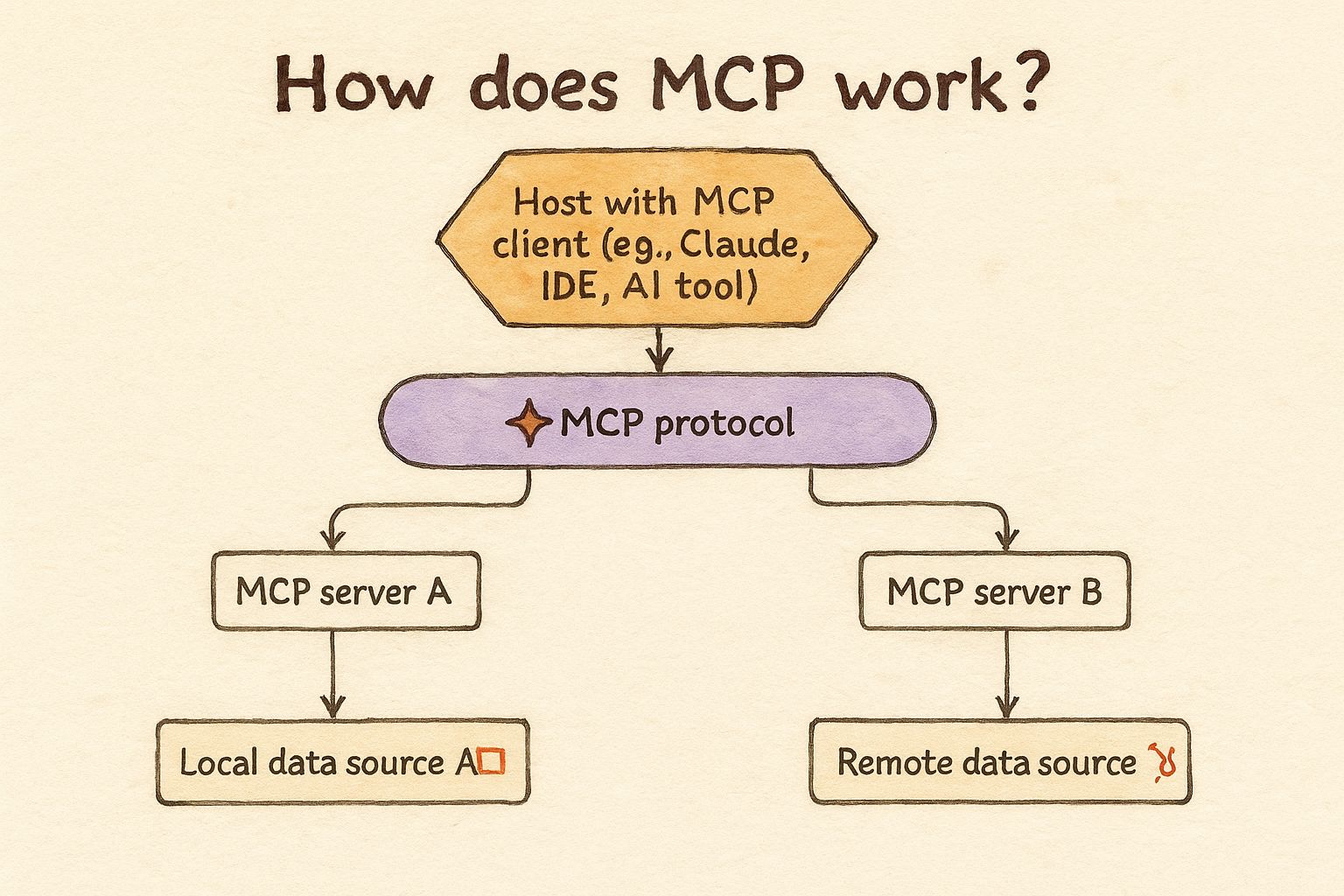
Introduction to MCP
The Model Context Protocol (MCP) is an emerging framework designed to enhance the interoperability and contextual understanding of AI models in complex systems. MCP provides a standardized way for AI models to share, interpret, and utilize contextual data across different platforms, ensuring seamless communication and improved decision-making. By enabling models to maintain and exchange context, MCP addresses challenges in scalability, adaptability, and integration within business ecosystems.
What is MCP?
MCP is a protocol that defines how AI models can encapsulate and share contextual information—such as user intent, environmental data, or task-specific parameters—with other models or systems. It acts as a middleware layer, ensuring that context is preserved and accurately interpreted, regardless of the underlying AI architecture or platform. Key features include:
- Context Encapsulation: Packaging relevant data (e.g., user history, preferences, or session state) into a standardized format.
- Interoperability: Enabling different AI systems to communicate context without proprietary constraints.
- Dynamic Adaptation: Allowing models to adjust their behavior based on real-time contextual updates.
- Security and Privacy: Ensuring sensitive data within the context is encrypted and compliant with regulations like GDPR.
Why MCP Matters for Businesses
In today’s fast-paced digital economy, businesses rely on AI to drive automation, personalization, and decision-making. However, fragmented AI systems often struggle to share context, leading to inefficiencies or suboptimal outcomes. MCP addresses this by:
- Enhancing Customer Experience: By sharing context across platforms (e.g., chatbots, recommendation engines, CRM systems), businesses can deliver personalized experiences. For example, a customer interacting with a chatbot can seamlessly transition to a human agent without repeating information.
- Streamlining Operations: MCP enables AI systems to share operational context, such as inventory levels or supply chain data, improving efficiency in logistics or manufacturing.
- Reducing Integration Costs: Standardized context-sharing reduces the need for custom integrations, saving time and resources.
- Enabling Scalability: As businesses adopt multiple AI models, MCP ensures they work cohesively, supporting growth without silos.
Implementing MCP in Business
Implementing MCP requires a strategic approach to integrate the protocol into existing AI workflows and business processes. Below is a step-by-step guide for businesses looking to adopt MCP:
1. Assess AI Ecosystem
- Audit Existing Systems: Identify all AI models, platforms, and data flows within the organization.
- Identify Context Needs: Determine what contextual data (e.g., user profiles, transaction history, or real-time analytics) is critical for operations.
2. Adopt MCP-Compatible Frameworks
- Select Compatible Tools: Choose AI platforms and frameworks that support MCP or can be extended to do so. For example, open-source libraries or APIs that align with MCP standards.
- Develop Middleware: Create or adopt middleware that translates proprietary AI outputs into MCP-compliant formats.
3. Define Context Models
- Standardize Context Structures: Define how context (e.g., user intent, session data) will be structured and shared. For instance, a retail business might define context as a JSON object containing user ID, purchase history, and current browsing session.
- Ensure Interoperability: Test context-sharing across different systems to ensure compatibility.
4. Integrate with Business Processes
- Customer-Facing Applications: Implement MCP in customer service platforms, such as chatbots or virtual assistants, to maintain context during multi-channel interactions.
- Internal Operations: Use MCP to enable AI-driven analytics in supply chain management, ensuring models share real-time data like inventory levels or demand forecasts.
- Marketing Personalization: Leverage MCP to share user context across marketing tools, enabling hyper-targeted campaigns.
5. Ensure Security and Compliance
- Encrypt Contextual Data: Use encryption standards (e.g., AES-256) to protect sensitive data within MCP payloads.
- Comply with Regulations: Ensure MCP implementations adhere to data privacy laws like GDPR, CCPA, or industry-specific standards.
6. Monitor and Optimize
- Track Performance: Use KPIs like response time, customer satisfaction, or operational efficiency to measure MCP’s impact.
- Iterate Based on Feedback: Continuously refine context models and integration strategies based on real-world performance.
Real-World Examples
E-Commerce
An online retailer implements MCP to connect its recommendation engine, chatbot, and inventory system. When a customer browses products, the recommendation engine shares context (e.g., browsing history, preferences) via MCP to the chatbot. If the customer asks about product availability, the chatbot retrieves real-time inventory data from the warehouse system, providing accurate responses without delays.
Financial Services
A bank uses MCP to integrate its fraud detection AI with customer support systems. When a transaction is flagged as suspicious, the fraud model shares context (e.g., transaction details, user history) with the support system. This enables agents to quickly verify the transaction with the customer, reducing resolution time and improving trust.
Healthcare
A hospital adopts MCP to connect diagnostic AI models with patient management systems. When a diagnostic model identifies a potential condition, it shares context (e.g., patient symptoms, medical history) with the scheduling system, which automatically prioritizes appointments and notifies doctors.
Challenges and Considerations
- Adoption Costs: Initial integration of MCP may require investment in infrastructure and training.
- Standardization Gaps: While MCP aims for universal compatibility, some legacy systems may require custom adapters.
- Data Privacy: Businesses must ensure MCP implementations comply with regional data protection laws.
- Scalability: As context data grows, businesses need robust infrastructure to handle increased complexity.
The Future of MCP in Business
As AI adoption accelerates, MCP is poised to become a cornerstone of enterprise AI strategies. Future developments may include:
- Wider Adoption: Industry-wide standards for MCP could emerge, driven by organizations like IEEE or W3C.
- Enhanced AI Collaboration: MCP could enable cross-organizational context-sharing, such as in supply chain ecosystems or healthcare networks.
- Integration with Emerging Tech: MCP may evolve to support context-sharing in IoT, edge computing, or blockchain-based systems.
Conclusion
The Model Context Protocol (MCP) is a game-changer for businesses seeking to maximize the value of their AI investments. By enabling seamless context-sharing, MCP enhances customer experiences, streamlines operations, and reduces integration costs. Businesses that adopt MCP strategically can position themselves as leaders in the AI-driven economy, delivering smarter, more connected solutions to their customers and stakeholders.