AI vs. Human Customer Service
What Business Owners Need to Know
Many companies now use AI-powered tools (like chatbots and voice assistants) to handle customer inquiries. These systems work around the clock and can dramatically cut support costs (one report found chatbots can resolve routine questions and reduce costs by ~30%). For example, AI chatbots never sleep – they give instant answers any time of day. This means a customer texting at 3 AM can get help immediately, without hiring extra night-shift staff. However, research shows most people still prefer real humans for complex or emotional issues. In fact, 75% of consumers say they’d rather talk to a person when problems get tricky.
In this post, we’ll look at the big advantages of AI in customer service, its current limits, and real-world examples so you can see where bots make sense – and where the human touch is irreplaceable.
Advantages of AI in Customer Service
- 24/7 Availability: AI chatbots never need a break or sleep, so they can answer questions any time of day or night. This ensures no inquiry goes unanswered—even on nights and weekends.
- Speed & Consistency: Bots respond instantly and follow scripts exactly, offering fast and uniform answers without fatigue or distractions.
- Cost Savings & Scalability: Bots can answer many customers at once. Businesses scale support without hiring waves of agents. Studies show up to 30% savings in support costs.
- Handling Repetitive Tasks: AI excels at processing returns, checking order status, resetting passwords, and answering FAQs—freeing humans to handle more complex or high-value issues.
- Data-Driven Help: AI can personalize responses by analyzing customer history or behavior in real time—something a human might take much longer to do.
Where Humans Still Excel
- Emotional Intelligence: Real people sense frustration and respond with empathy. Bots can’t comfort a customer or adapt their tone in a truly human way.
- Complex Problem-Solving: Humans use judgment to handle unusual cases or make policy exceptions. AI sticks to scripts and struggles with one-off problems.
- Building Trust & Loyalty: A kind voice, personalized service, or thoughtful gesture (like sending flowers) builds long-term brand relationships that bots can't replicate.
- Critical Thinking & Judgment: Humans identify upsell opportunities, solve nuanced problems, and make decisions AI isn’t equipped for.
Real-World Examples
- Retail & E‑commerce: H&M’s chatbot answers FAQs and processes returns so humans can focus on style advice. AI handles ~70% of return cases, cutting resolution time in half.
- Telecom & Finance: Vodafone’s TOBi resolves 70% of customer inquiries, slashing costs. DNB’s AI bot manages 50%+ of monthly chats. Allianz’s Allie answers 80% of policy questions.
- AI-Assisted Agents: Harvard research showed agents using AI reply 20% faster and more empathetically. AI drafts responses; humans refine them with empathy and judgment.
- Lessons from Failure: Walmart’s AI bot mishandled an emotional case due to canned responses—highlighting the need for human escalation when things get sensitive.
Conclusion: Finding the Right Balance
In summary, AI brings huge benefits to customer service—instant replies, scalable operations, and lower costs. It shines with FAQs, routine tasks, and after-hours support. But when the stakes are high, emotions run hot, or problems get complex, human agents are still the gold standard.
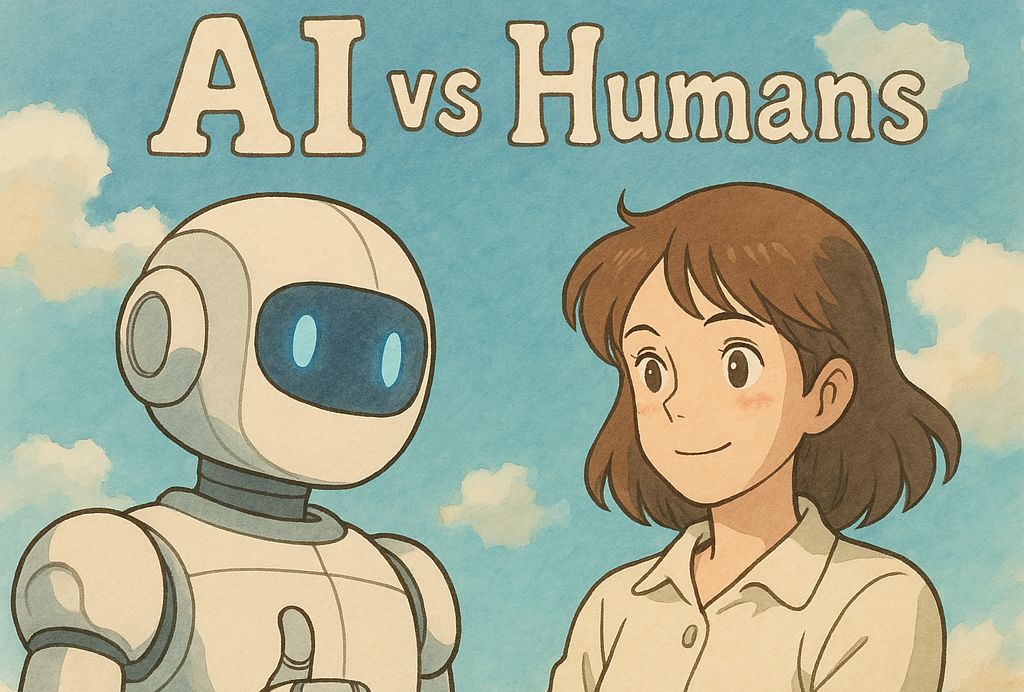
Most experts agree: it’s not about AI versus humans, but AI plus humans. The smartest strategy combines the speed and scale of bots with the creativity, empathy, and judgment of people.
Key takeaway: Use AI to handle simple, high-volume inquiries—and keep real agents for the moments that matter. A thoughtful hybrid approach gives you the best of both worlds.